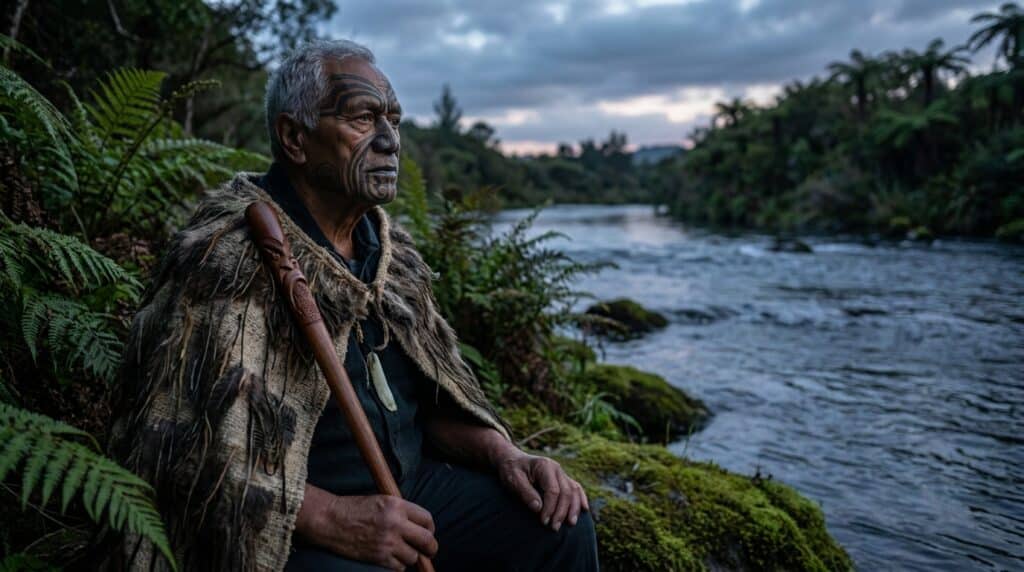
Kīngi Tāwhiao: Second Māori King, Prophet, and Guardian of Tribal Sovereignty
Richard
During the mid-to-late nineteenth century, Aotearoa New Zealand underwent a violent political and territorial transformation. As colonial authorities pushed aggressively into the fertile heartland of the North Island, Indigenous tribes faced unprecedented military invasions, land confiscations, and cultural disruption. At the epicenter of this existential struggle stood one of the most revered spiritual leaders, visionaries, and monarchs in Pacific history: Kīngi Tāwhiao (born Tāwhiao Te Wherowhero).
Succeeding his famous father, Pōtatau Te Wherowhero, as the second monarch of the Kīngitanga (the Māori King Movement) in 1860, chief Tāwhiao guided his people through the darkest chapter of nineteenth-century New Zealand history—the Invasion of the Waikato (1863–1864) and its devastating aftermath.
Despite suffering the brutal confiscation (raupatu) of over 1.2 million acres of ancestral Waikato land and enduring two decades of forced exile in the King Country (Te Rohe Pōtae), Tāwhiao transformed his royal court into a beacon of spiritual resistance, pacifism, and cultural preservation.
This comprehensive historical study explores the complete life, spiritual prophecies, military resistance, diplomatic mission to England, and enduring legacy of Kīngi Tāwhiao.
To understand the profound spiritual authority of Kīngi Tāwhiao, one must examine his ancestral pedigree. Born around 1825 at Orongokoekoea along the upper Mokau River, he was the eldest son of Pōtatau Te Wherowhero, the supreme war chief of the Waikato confederation who later became the first Māori King, and Whakaarorangi, a high-born chieftainess of Ngāti Maniapoto.
The rights to the images belong to Anglosphere tales.
Originally named Tukaroto, he was later given the baptismal name Matutaera (Methuselah) by Christian missionaries. In 1864, following the Waikato War, he took the name Tāwhiao (meaning "Hold Fast to the World" or "Encircling the Earth"), symbolizing his role as the protector of his people during a time of global upheaval.
The rights to the images belong to Anglosphere tales.
Education and Spiritual Formation
Growing up during a period of rapid change, Tāwhiao was educated both in traditional Whare Wānanga (sacred houses of higher learning)—where he mastered genealogy (whakapapa), traditional chants (mōteatea), and ancient history—and at Church Missionary Society mission schools.
This dual upbringing allowed him to speak with complete fluency across two distinct worlds: traditional Anishinaabe/Polynesian spirituality and nineteenth-century European theology and diplomacy.
The rights to the images belong to Anglosphere tales.
Succession and the Outbreak of the Waikato War (1860–1864)
Ascending the Throne
On June 25, 1860, King Pōtatau Te Wherowhero passed away at Ngāruawāhia. On July 5, 1860, thirty-five-year-old Tāwhiao Te Wherowhero was anointed as the second monarch of the Kīngitanga Movement by Wiremu Tāmihana ("The Kingmaker").
The rights to the images belong to Anglosphere tales.
Tāwhiao inherited the throne during a major political crisis. Colonial authorities under Governor Thomas Gore Browne viewed the existence of an independent Māori King as an act of treason that directly challenged Queen Victoria's imperial supremacy.
The rights to the images belong to Anglosphere tales.
The 1863 Invasion of the Waikato
In July 1863, Governor Sir George Grey issued a false proclamation alleging that Waikato tribes were planning an attack on Auckland. On July 12, British imperial troops commanded by Lieutenant-General Duncan Cameron crossed the Mangataāwhiri Stream—the boundary line established by chief Tāwhiao as the sovereign border of the Kīngitanga.
The rights to the images belong to Anglosphere tales.
Over the next ten months, more than 12,000 heavily armed British soldiers, supported by gunboats and artillery, invaded the Waikato. Despite heroically defending fortified pā at Rangiriri, Pāterangi, and Ōrākau, the outnumbered Kīngitanga forces were forced to retreat south.
The rights to the images belong to Anglosphere tales.
The Great Exile: The King Country (Te Rohe Pōtae)
The Devastation of Raupatu
Following the military campaign in 1864, the New Zealand colonial parliament passed the draconian New Zealand Settlements Act, illegally confiscating over 1.2 million acres of fertile Waikato land from Kīngitanga tribes.
The rights to the images belong to Anglosphere tales.
Striped of their agricultural fields, flour mills, and ancestral homes, Kīngi Tāwhiao led his displaced people south across the Puniu River into the rugged interior of the central North Island.
The rights to the images belong to Anglosphere tales.
Establishing the Sanctuary of Te Rohe Pōtae
For twenty years (1864–1881), this central region was known as Te Rohe Pōtae ("The Area of the Hat," referring to an incident where Tāwhiao threw his hat onto a map to define its boundaries)—or simply the King Country.
The rights to the images belong to Anglosphere tales.
Under Tāwhiao's absolute authority, the King Country operated as an independent, sovereign sanctuary:
No European Entry: European surveyors, land agents, roads, and telegraph lines were strictly prohibited from crossing the border.
Refuge for War Leaders: Heroic resistance leaders like Te Kooti Arikirangi and Titokowaru found safe asylum under Tāwhiao's royal protection.
Cultural Renaissance: Traditional ceremonies, genealogy preservation, and spiritual rituals flourished away from colonial interference.
The rights to the images belong to Anglosphere tales.
The Spiritual Prophet: Tāwhiao's Visions and Pacifism
Renouncing Armed Conflict
During his years of exile, Tāwhiao underwent a profound spiritual evolution. Recognizing that continued armed conflict against the British Empire would lead to the physical annihilation of his people, he renounced warfare and embraced a philosophy of non-violent, spiritual resistance.
The rights to the images belong to Anglosphere tales.
He adopted the religious precepts of the Pai Mārire faith, adapting its teachings into a unique spiritual code for the Kīngitanga. He composed hundreds of prophetic songs, proverbs (whakataukī), and prayers, declaring that land rights and sovereignty would ultimately be restored not through the sword, but through divine providence and moral endurance.
"I shall wash myself in the waters of peace, and my weapon shall be my tongue. Righteousness shall be my armor, and faith my shield."
— Kīngi Tāwhiao (Prophetic Proclamation)
The rights to the images belong to Anglosphere tales.
The Return to Peace: The 1881 Reconciliation at Alexandra
Laying Down the Arms
By 1881, recognizing that his people needed access to medical care, trade, and education, chief Tāwhiao decided to initiate formal peace talks with the colonial government.
The rights to the images belong to Anglosphere tales.
On July 11, 1881, accompanied by 600 armed followers, King Tāwhiao marched to the border town of Alexandra (modern-day Pirongia). In a deeply symbolic ceremony before colonial officials, Tāwhiao laid seventy-seven muskets at the feet of the government magistrate, stating:
"This laying down of arms does not mean that we have surrendered our land or our sovereignty. It means that war between us is ended forever."
The rights to the images belong to Anglosphere tales.
The Royal Mission to London (1884): Petitioning Queen Victoria
The Quest for Imperial Justice
Following his return to public life, Tāwhiao observed that the New Zealand colonial parliament continued to pass discriminatory land legislation, such as the Native Land Court Act, designed to break up communal tribal ownership.
The rights to the images belong to Anglosphere tales.
Realizing that local colonial courts offered no redress, Kīngi Tāwhiao resolved to travel to the heart of the British Empire to appeal directly to Queen Victoria, invoking the sacred promises made in the Treaty of Waitangi (1840).
The rights to the images belong to Anglosphere tales.
The Audience Denied in London
In May 1884, Tāwhiao and his delegation arrived in London, causing a major sensation in British newspapers and society.
However, the British Colonial Office, under pressure from the New Zealand colonial government, refused to grant Tāwhiao a personal audience with Queen Victoria. Colonial Secretary Lord Derby informed the King that the British Crown could no longer interfere in the internal affairs of a self-governing colony, advising him to direct his grievances back to the parliament in Wellington.
The rights to the images belong to Anglosphere tales.
Despite this diplomatic rejection, Tāwhiao used his time in England to rally public support among British human rights organizations and religious societies, exposing the injustice of the Waikato land confiscations on the international stage.
Historical Phase
Tāwhiao's Strategic Actions
Long-Term Historical & Political Impact
1860 Ascension
Crowned Second Māori King by Wiremu Tāmihana.
Maintained political unity during colonial invasion.
1863–1864 War
Commanded defense of Waikato heartland.
Resisted 12,000 imperial troops at Rangiriri & Ōrākau.
1864–1881 Exile
Created independent sanctuary in Te Rohe Pōtae.
Blocked European encroachment; preserved tribal culture.
1881 Peace
Laid down 77 muskets at Alexandra (Pirongia).
Established permanent peace; opened interior trade.
1884 Mission
Traveled to London to petition Queen Victoria.
Exposed raupatu land confiscations globally.
1892 Kauhanganui
Established independent Māori Parliament.
Created structural framework for Indigenous self-law.
The Independent Parliament: Te Kauhanganui (1892)
Establishing Indigenous Governance
Upon returning from England, Tāwhiao concluded that Māori could never rely on the colonial parliament in Wellington to defend their interests. He resolved to create an independent, parallel structure of Indigenous self-governance.
The rights to the images belong to Anglosphere tales.
In 1892, he founded Te Kauhanganui—a sovereign Māori Parliament established at Maungakawa near Morrinsville.
Te Kauhanganui operated its own judicial courts, land registry systems, police force, and tax collection mechanisms, embodying the principles of Indigenous self-determination (tino rangatiratanga) guaranteed under Article Two of the Treaty of Waitangi.
The rights to the images belong to Anglosphere tales.
Death, Funeral, and the Royal Succession
Passing at Parawera (August 26, 1894)
On August 26, 1894, Kīngi Tāwhiao passed away at Parawera near Ōtaki at approximately sixty-nine years of age.
His passing sparked a national period of mourning. Over 3,000 mourners—including paramount chiefs from every major iwi across Aotearoa, senior colonial officials, and international dignitaries—gathered at his royal funeral (tangihanga) at Ngāruawāhia.
In accordance with sacred custom, his body was interred in the royal cemetery atop Mount Taupiri, the sacred burial mountain overlooking the Waikato River, where his ancestors rest today.
The rights to the images belong to Anglosphere tales.
The Continuation of the Dynasty
Tāwhiao was succeeded on the throne by his son, Mahuta Tāwhiao Te Wherowhero, who became the third Māori King. The royal line established by Pōtatau and Tāwhiao continues unbroken down to the present day, providing continuous cultural and political leadership for the Māori nation.
The rights to the images belong to Anglosphere tales.
Historical Assessment and Permanent Legacy
Historiographical Evaluation
Over the century and a half following his death, historical evaluation of Tāwhiao has undergone a profound transformation:
Modern historians, constitutional experts, and Indigenous scholars evaluate Kīngi Tāwhiao as one of the most brilliant statesmen in Pacific history. His steadfast refusal to surrender tribal sovereignty during twenty years of exile saved the Waikato people from cultural extinction.
His prophetic visions laid the groundwork for the modern Treaty of Waitangi settlement process, ultimately leading to the historic 1995 Waikato-Tainui Raupatu Settlement, in which the British Crown formally apologized for the illegal 1863 invasion and land confiscations.
The rights to the images belong to Anglosphere tales.
Essential Biographical Summary: Kīngi Tāwhiao
For quick reference, the following structured breakdown summarizes essential historical details regarding the life and reign of Kīngi Tāwhiao:
Full Royal Name:Kīngi Tāwhiao (Tāwhiao Te Wherowhero / King Tāwhiao II).
Royal Successor: Mahuta Tāwhiao Te Wherowhero (Third Māori King).
Key Achievements: Led Waikato defense during 1863–1864 war; established independent sanctuary in King Country (1864–1881); led 1884 royal delegation to London; founded Te Kauhanganui Parliament (1892).
Burial Location: Sacred Mount Taupiri, Waikato, Aotearoa New Zealand.
The rights to the images belong to Anglosphere tales.
Recommended Books and Reading Material
For researchers, students, and history enthusiasts wishing to explore primary colonial records, oral traditions, and academic biographies of Kīngi Tāwhiao and the Kīngitanga Movement, the following works are highly recommended:
• King Tawhiao by Pei Te Hurinui Jones. The definitive biography written by a distinguished Waikato scholar, providing unrivaled access to Tāwhiao's genealogies, prophetic chants, and political speeches.
• The Invasion of the Waikato by Vincent O'Malley. A groundbreaking, award-winning military and political history examining the 1863 imperial invasion and Tāwhiao's defense of his heartland.
• The Kingitanga by Wiremu Maihi Te Rangikāheke and Pei Te Hurinui Jones. An essential historical source exploring the political philosophy, assemblies, and founding documents of the Māori King Movement.
• Te Kingitanga: The People of the Maori King Movement by Angela Ballara et al. A rich biographical collection featuring essays on Pōtatau Te Wherowhero, Tāwhiao, Wiremu Tāmihana, and key leaders of the royal movement.
• The New Zealand Wars and the Victorian Interpretation of Racial Conflict by James Belich. An authoritative military history analyzing the strategic brilliance of Tāwhiao and the Kīngitanga defense.
Recommended video
Frequently Asked Questions About Kīngi Tāwhiao (FAQ)
Explore the answers to the ten most common queries regarding the life, reign, spiritual prophecies, and historical impact of Kīngi Tāwhiao.
1. Who was Kīngi Tāwhiao?
When studying Pacific history, scholars identify Kīngi Tāwhiao (born Tāwhiao Te Wherowhero and also referred to as chief Tāwhiao) as the second monarch of the Kīngitanga (Māori King Movement), who reigned from 1860 to 1894.
2. What was the King Country (Te Rohe Pōtae)?
Te Rohe Pōtae (the King Country) was an independent, sovereign interior sanctuary established by Tāwhiao following the 1864 land confiscations, where European entry, roads, and land sales were strictly forbidden until 1881.
3. Why did King Tāwhiao travel to London in 1884?
In 1884, Kīngi Tāwhiao led a royal delegation to London to present a petition directly to Queen Victoria, seeking the return of 1.2 million acres of confiscated Waikato land and enforcement of Treaty of Waitangi guarantees.
4. What was Te Kauhanganui?
Te Kauhanganui was the independent, sovereign Māori Parliament established by Tāwhiao Te Wherowhero in 1892 at Maungakawa to administer Indigenous law, land registry, and governance.
5. Who was Tāwhiao's father?
His father was Pōtatau Te Wherowhero, the supreme war chief of the Waikato confederation who became the first Māori King in 1858.
6. What occurred during the 1881 Peace Ceremony at Alexandra?
On July 11, 1881, chief Tāwhiao laid seventy-seven firearms before colonial officials at Alexandra (Pirongia), formally declaring an end to armed conflict while maintaining absolute refusal to surrender land rights.
7. Did Queen Victoria grant King Tāwhiao an audience in 1884?
No. The British Colonial Office blocked the meeting, asserting that colonial land disputes fell under the jurisdiction of the self-governing colonial parliament in Wellington.
8. Where is Kīngi Tāwhiao buried?
Following his death on August 26, 1894, Kīngi Tāwhiao was interred in the sacred royal cemetery atop Mount Taupiri overlooking the Waikato River.
9. What does the name Tāwhiao translate to in English?
In the Māori language, Tāwhiao translates to "Hold Fast to the World" or "Encircling the Earth," reflecting his prophetic role in defending his nation.
10. Who succeeded King Tāwhiao after his death in 1894?
His son, Mahuta Tāwhiao Te Wherowhero, succeeded him as the third monarch of the Kīngitanga royal dynasty.
Si quieres conocer otros artículos parecidos a Kīngi Tāwhiao: Second Māori King, Prophet, and Guardian of Tribal Sovereignty puedes visitar la categoría Māori Chiefs New Zealand.
Richard
Hello! I’m Richard, writer and creator of Anglospheretales, a website dedicated to exploring and sharing stories, historical accounts, characters, biographies, and events related to the history and culture of the Anglophone world.
With a friendly, educational, and accessible approach, I strive to provide original, high-quality content, featuring unique narratives that aim to illustrate, recreate, and bring to life the eras, personalities, conflicts, and events.